


Mini Footballs and the Pros and Cons of each type


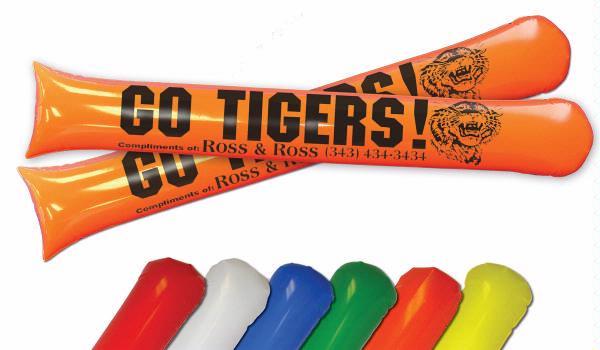
Every year around this time we sell thousands and thousands of mini footballs.  These footballs are great for cheerleaders to throw out to the crowd at football games.  All of the mini footballs help to keep the crowd involved and excited.  There are 3 main mini football types that we sell and I’ll list the pros and cons of each.  Before I get into the various types of mini footballs, I’ll list the pros of all mini footballs.

Benefits of All Mini Footballs:

  1. They help generate team spirit and excitement with the crowd.
  2. They are fun.
  3. They can be used as a marketing campaign when printed with the custom marketing info.
  4. Great for pep rallies and for game day.

Plastic Mini Football
Pros:

  1. These are the least expensive footballs.
  2. Because they are the smallest option, the shipping is the least expensive for these footballs.
  3. Because they are made from blow-molded plastic, they will never lose their air or shape.
  4. 12 different colors to choose from:  Black, White, Blue, Red, Yellow, Orange, Green, Brown, Purple, Clear, Gold, or Glow in the Dark.

Cons:

  1. Because the mini footballs are only about 6″ from tip to tip, the imprint area is the smallest out of the three footballs measuring 2″ W x 1.25″ H.  This are is plenty big enough to print your team name and mascot though.
  2. Because these are so lightweight, they don’t throw quite as far as the vinyl or foam mini footballs.
  3. Because they are made of molded plastic, the tips of these footballs are hard and can hurt someone if they are hit directly in the face.

Vinyl Mini Football
Pros:

  1. These footballs are considerably larger than the plastic mini footballs.  They measure approximately 7″ in from tip to tip; however, the diameter of them is much larger, depending on how much they are inflated.
  2. They have an athletic valve so you can add more air or deflate.
  3. Because these are made of vinyl and are air filled, they are much softer.  They make a much better choice for indoor use or for children’s parties.
  4. These footballs throw much farther and better than their plastic mini football counterpart because they have more weight to them.
  5. The imprint area is larger on the vinyl mini footballs than on the plastic footballs measuring 2″ W x 1.5″ H, allowing your ad space to be a little larger.
  6. 14 different colors to choose from:  Black, White, Brown, Burgundy, Pink, Red, Orange, Yellow, Green, Blue, Purple, Gold, Silver, or Glow in the Dark.
  7. This one is just my opinion (from over 10 years of selling them), but recipients will keep these vinyl footballs longer than the plastic footballs because they have more play value.

Cons:

  1. They are more expensive than the plastic mini footballs, but only usually by 5 to 10 cents each.
  2. They are a little more expensive to ship due to the size difference over the plastic mini footballs.
  3. They will lose air after several months (but since they have an athletic valve, they can easily be re-inflated).

Foam Mini Footballs (Nerf type)
Pros:

  1. Higher perceived value than plastic or vinyl footballs.
  2. Throws better than plastic or vinyl footballs.
  3. Kept for a long time by recipients because of the high play value.

Cons:

  1. More expensive than plastic or mini footballs.
  2. Can become water logged if played with in water.

While all three types of mini footballs have value, you have to decide on which type fits into your setting and budget.  The important thing is to help generate team spirit.  These spirit items are perfect for doing that.

Adobe Illustrator Tutorial – Saving File for Older Illustrator Versions


Here are the easy instructions on how to save your Adobe Illustrator file down to an earlier version.  Have you noticed how fast newer versions of software come out now?  It seems within a few months of buying new software, there is an even newer version of the software out.  If you bought every new version, you would never learn all of the new features available.  With this tutorial, I’m going to show you how to save your Adobe Illustrator .eps file so that it will be compatible with older versions.

Step 1:  After creating you file, click on File, then Save As.

adobe-illustrator-tutorial2

Step 2:  After typing in the file name, click Save.

adobe-illustrator-tutorial3

Step 3:  Select the version that you want to save down to and Click OK.  And that’s all!

adobe-illustrator-tutorial5

Promotional Products

Fun Halloween History


Well, it’s getting close to that exciting time of year (for us old kids, anyway).  Halloween is only a few months away.  This is a critical time to really market your business in order to finish the 4th quarter strong.  Using Halloween promotional products is a great to do this.  Halloween bags for trick or treating are one of the best forms of marketing during the Halloween season.  These trick or treat bags not only market your business because of the custom imprint on them, but they also have many safety tips to help keep the kids who are trick or treating safe.

One thing to keep in mind about Halloween is that it is NOT a devil’s holiday as many people believe.  If you dress us like devil’s, you can make it that, but Halloween is what you make it to be.

Facts and History about Halloween

Here are some interesting facts and some of the history about Halloween put together by the National Confectioners Association.  I have added some of my own various comments in Bold Italics.

First, a little about the history of Halloween:

  • The celebration of Halloween started in the United States as an autumn harvest festival. In pioneer days, some Americans celebrated Halloween with com-popping parties, taffy pulls and hayrides.
  • In the late nineteenth century, with the large influx of Irish immigrants into the U.S., Halloween became associated with ghosts, goblins and witches.
  • Jack-o-lanterns are an Irish tradition. In Ireland, oversized rutabagas, turnips and potatoes were hollowed-out, carved into faces and illuminated with candles to be used as lanterns during Halloween celebrations.
  • The word “witch” comes from the Old Saxon word “wica”, meaning “wise one.” The earliest witches were respected dealers in charms and medicinal herbs and tellers of fortunes.
  • The pumpkin originated in Mexico about 9,000 years ago. It is one of America’s oldest known vegetables. Pumpkins generally weigh from 15-to-30 pounds, although some weigh as much as 200 pounds. The majority of pumpkins are orange, but they also can be white or yellow. They are rich in vitamin A, beta-carotene and potassium, and their seeds provide protein and iron. They make great pumpkin pie too.  I would love to carve a jack-o-lantern out of a 200 pound pumpkin.
  • According to legend, the jack-o’-lantern began with a fellow named Jack, who was too stingy to be allowed into Heaven and too mischievous to join the Devil in hell. As consolation, the Devil threw Jack a lighted coal, which Jack placed inside a turnip he was eating. It is said that Jack continues to use the coal to light his path as he searches for a final resting place.  Notice for all the over the top parents that don’t let your kids participate in Halloween, that this is a legend.  That means it is NOT true.  Halloween is a fun time.  You don’t have to let your children dress up as the devil.

Trick-or-Treat Tidbits

Adults

  • Four-in-ten (41%) adults admit that they sneak sweets from their own candy bowl. I bet this is closer to ten-in-ten (100%)
  • On Halloween night, the majority (52%) of those providing treats to costumed kiddies will be passing out chocolate, while three‐in‐ten will drop hard candy or lollipops into the sacks. My question is, “Why do people still give out those nasty chewy fake peanut butter candies?  You know the ones I’m talking about that are wrapped in either Black or Orange wrappers.  Those are nasty and I bet most of them end up in the trash can.  May since the stastics show that 41% of adults admit sneaking candy from their own bowl, that means the 59% that aren’t doing it are giving out these nasty candies.
  • 62% of adults will be handing out candy because “it’s a personal favorite” or it’s a household tradition (55%)  This is the way to do it.  We give out Reece’s, Almond Joy, Kit Kats, and other GOOD stuff.
  • 43% of grown-up celebrants cite costumes as one of the most indispensable parts of the holiday.  What’s the point if you don’t have a costume?
  • About 26% of households will include full-size candy (chocolate and non-chocolate) in their Halloween activities.  I love these households.  Don’t be stingy with the goodies.
  • 90% of parents admit to sneaking goodies from their kids’ Halloween trick-or-treat bags.  Me? Never!  I can’t even believe you would suggest that.
  • Parents favorite treats to sneak from their kids’ trick-or-treat bags are snack-size chocolate bars (70 percent sneak these), candy-coated chocolate pieces (40 percent), caramels (37 percent) and gum (26 percent).  These statistics don’t quite add up to 100% but I guess that’s beside the point.  Full-size chocolate bars would be closer to 100%.  Don’t you know we want to help our kids eat healthier, so we have to ingest some of this sugar ourself.  It’s just to protect our kids though, not for us.
  • Parents least favorite goodie to take from their kids’ trick-or-treat bags is licorice (18 percent). No thanks on the licorice.

Kids

  • 30% of kids report that they SORT their candy first when returning home with trick-or-treat loot, others:
    • Savor it (20%) YES!
    • Share it (16%)
    • Stash it (14%)
    • Swap it (7%)
  • Kids say they prefer homes that give: anything made with chocolate (68%) followed by lollipops (9%), gummy candy (7%) and bubble gum or chewing gum (7%) Chocolate! Chocolate! Chocolate!
  • More than 93% of children go trick-or-treating each year.  I feel bad for that 7% that don’t get to partake in this event.  Halloween is not a devil’s holiday, people!
  • Kids tell us that their favorite treats to receive when trick-or-treating are candy and gum. Eighty-four percent of kids said candy and gum are their favorites over other options like baked goods or small toys. I don’t let my kids eat baked goods.  Who knows how many roaches and rats are running around these kitchens.  Or these days, what kind of poison could be in those brownies.

Halloween Promotional Products

Is Bad Publicity Good?


There has always been the age old question, “Is Bad Publicity Good?”  Many people feel that any type of publicity is good because it brings your business name to the top of the media for thousands or even millions to hear.  The theory, then, is that they eventually forget the bad and just remember your name.  But has anyone ever heard of the company, BP?  Of course you have!  Anyone with a radio, television, newspaper, or an ear has heard lots of negative about BP and the way they are handling the Gulf of Mexico Deep Water Oil Spill.  My question for those of you who believe that bad publicity is good, do you think BP is doing well from all of the negative publicity.  After seeing their 2nd Quarter Profits, I would say that evidence is conclusive that they are not doing well as a result.  Now, I’m not saying fold up shop with any negative publicity.  You have to do damage control and take some losses to keep your loyal customers.  After time many companies can bounce back.  Exxon is doing well after it’s big oil spill in Alaska, so they recovered.  Bad publicity is going to happen occasionally.  While most of our businesses will not have a major incident such as an oil spill, we often get unhappy customers.  Sometimes, the customer is unhappy because of a valid point and sometimes we get those customers that can’t be made happy no matter what you do.  However, with unhappy clients, you have to rectify the situation.  Your customers may not always tell someone else about your business if they are happy, but you can bet your last dollar that they will tell everyone that will listen if they are unhappy.  So take a loss if you have to and make them happy.  Sometimes that may be a discount, full refund, or just a gift.  That gift can be a premium item printed with your business contact information.  These premium promotional products can usually be ordered in small quantities and kept on hand for your clients that are unhappy.  Many times, just a simple gift like this can make them happy.

Converting Your Fonts to Outlines with Adobe Illustrator


When submitting artwork to have printed on your promotional products, it is very important to convert all of your text to outlines when using Adobe Illustrator.  In this tutorial, I will be using Illustrator CS2 to show you how to accomplish this; however, it will be very similar with newer versions such as CS3 or CS4 or older versions.  With the other versions, typically just the location on the menu may vary a little.  If you don’t convert your fonts to outlines, the receiving person of your art file might not have that exact same font.  When they open your file, their computer will substitute another font (often similar) in it’s place which can sometimes dramatically change the look, feel, and size of your art.  To avoid this, just follow these simple steps below.

Step 1:  After you have your text typed, highlight it with your pointer.

Illustrator Help - Highlight Text

Step 2:  On the top Menu, click on Type and select Create Outlines.

Adobe Illustrator Help Convert Outlines

Step 3:   Repeat with any other text on your art.  Using the selection tool (black arrow), you can highlight the entire art whether you are selecting text only or text and pictures and click on Create Outlines and do all the text at once.

Step 4:  Save your work.

It’s that simple.  By doing this, it will ensure that your art received will look the same as what you sent.  Of course, you should always receive a proof to double check.